A
MARK · CARE
IN THIS SCHEDULE
Home / Window Guides / Window Care and Maintenance
WINDOW SCHEDULE: APPENDIX A, UPKEEP
Window Care and Maintenance
A well-made window stays easy to open, close and see through when it gets small, regular attention.
This appendix to the window schedule covers the upkeep that matters: glass, tracks, seals, frame finishes and the moving parts. It ends with a season-by-season checklist and the signs that a problem has gone past what care can fix.
PLATE A
Hardware on timber
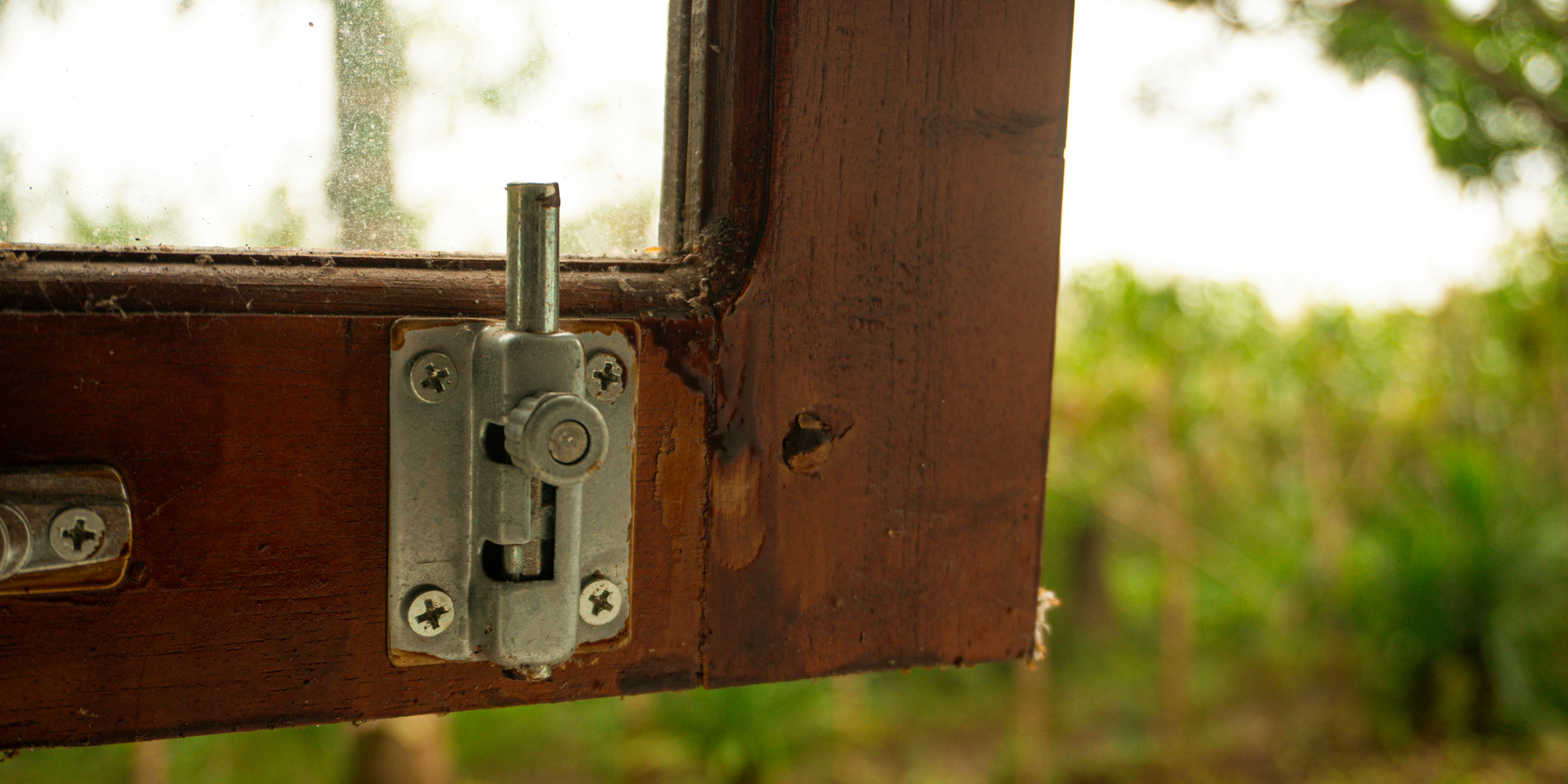
Reference photo: a metal latch on a weathered timber frame. Finish and hardware are where most care begins.
A1–2
MARK · SURFACES
A1 · CLEANING
Glass and tracks
Clean glass on a mild, overcast day so water does not dry into streaks before you finish. Warm water with a little mild detergent, a soft cloth or squeegee and a dry microfibre pass will handle most panes. Keep abrasive pads and scrapers away from coated or Low-E glass.
Tracks and sills collect grit that wears rollers and seals. Vacuum them with a narrow nozzle first, then wipe down, and keep the drainage slots in sliding and awning frames clear so rainwater can escape.
A2 · SEALING
Seals and weatherstrips
Seals keep out draughts, dust and rain, and they wear quietly. Close a strip of paper in the window: if it slides out freely, the seal is no longer doing its job. Gaskets that are flattened, cracked or shrinking back from the corners should be renewed, and brush or foam strips can usually be replaced in lengths.
Wipe seals with a damp cloth, not solvents, which harden rubber. Check the outside sealant where the frame meets the wall and fill gaps before water finds them.
A3–4
MARK · FRAMES
A3 · FINISHES
Timber paint and finishes
Timber lasts as long as its coating stays whole. Look at the bottom rail and the sill first, because they take the most sun and water. Hairline cracks, flaking paint or grey, raw wood are signals to act before moisture gets in.
Sand back loose paint, spot-prime bare timber and repaint with an exterior-grade system that suits the existing finish. Oiled or stained frames need a fresh coat when the surface stops beading water. Never paint over seals, hinges or the meeting faces of a sash, or the window will stick shut.
A4 · WASHING
Aluminium and uPVC
Neither needs painting, but both need washing. Wipe aluminium with mild soapy water to lift salt, pollution and grime that mark powder-coated finishes, then rinse. Treat uPVC the same way and skip bleach, solvents and abrasive creams, which dull and discolour it. For how each material ages, see the Frame Materials Guide.
A5
MARK · MOVING PARTS
TYPE · LUBRICATION
Hinges, latches and locks
If a window needs force, stop forcing it and find out what is binding first.
A stiff handle, a squeaking hinge or a lock that needs a second try are early warnings. Brush away dust, then apply a light silicone spray or a drop of light machine oil to hinges, pivots and friction stays, and work the window open and closed a few times. Use dry graphite or a lock lubricant in key cylinders, since oil gathers dirt. Tighten loose screws in hinges and keepers.
If a sash still drops or rubs on the frame after that, the hinge or the frame may be out of square, and it is worth a closer look.
A6
MARK · CALENDAR
Seasonal checks
Four short rounds a year catch most problems while they are still small. Walk each window with this schedule.
SEASONCHECK
SpringWash glass, frames and tracks after winter, clear drainage slots and look for mould on seals and sills.
SummerInspect paint and finishes on sun-facing frames and confirm that locks and stays still move freely in the heat.
AutumnClear leaves and grit from sills and tracks, then test seals and outside sealant before the wet months.
WinterWipe condensation from glass and sills, and watch for draughts and for timber sashes that swell and stick.
A7
MARK · LIMITS
When care is not enough
Maintenance slows wear, but it cannot undo rot that has reached the joints, a frame that has warped out of square or double glazing that has fogged between the panes. When cleaning, sealing and lubricating stop solving the problem, the question moves from care to repair or renewal.
Work through the five checks in Restore or Replace? to see which side your window falls on. If a new window is the answer, Measuring and Sizing Basics covers what to note down, and Glazing Options Explained helps when the glass is the weak point. Then describe the window you need through the Window Enquiry.
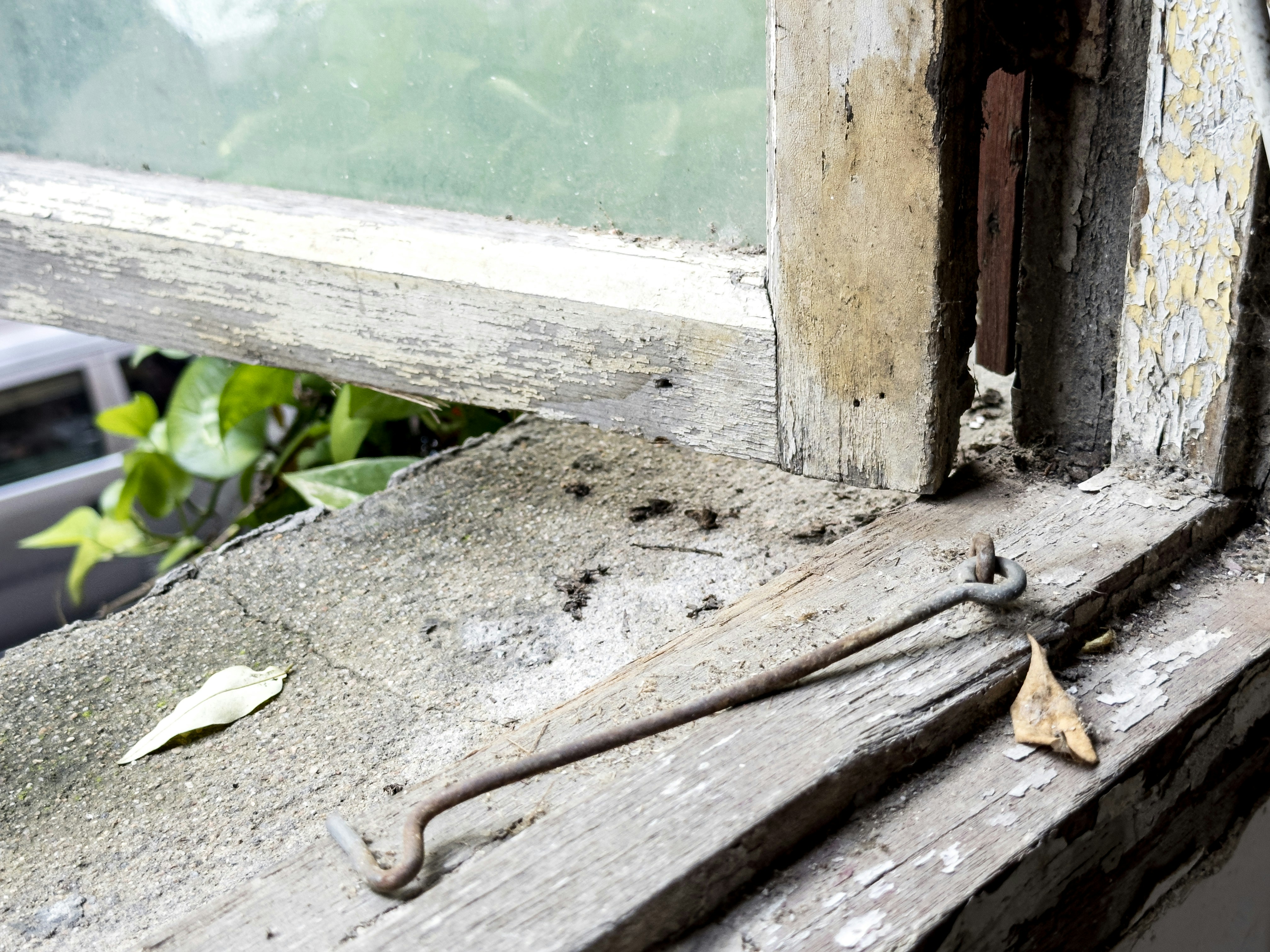
Reference photo: peeling paint and a worn frame, the point where care alone may not be enough.