05
MARK · DECIDE
Home / Window Guides / Restore or Replace?
WINDOW SCHEDULE: CHAPTER 05, TWO OPTIONS
Restore or Replace?
Read across each row and see which column your window keeps landing in.
Old windows show their age in the same places: the paint, the seals, the way the sash closes. Some of that is surface wear and some of it means the frame has reached its end. This chapter lays the question out as a schedule. Five checks run down the left. For each one, a column describes when restoring the existing window makes sense and when ordering a new one is the better call.
SCOPE OF THIS SCHEDULE
05
READ ACROSS
Two options, five checks
Option 1 keeps the window you have and repairs it. Option 2 orders a new window made to the opening. Neither is right by default: the condition of the frame and what you want from the window decide it.
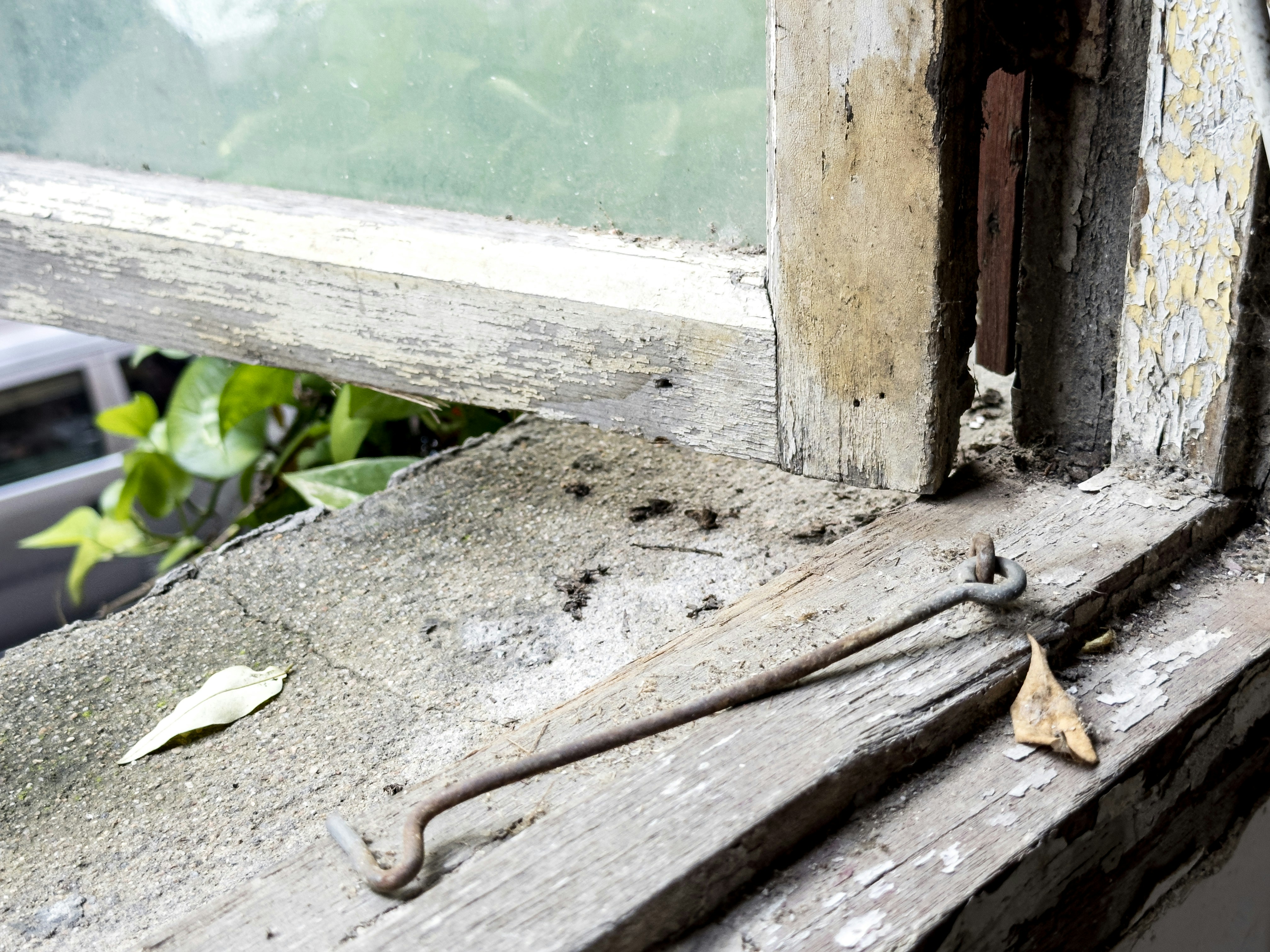
Reference photo: peeling paint and a hook latch on an old timber frame, the kind of detail the first check looks at.
CHECK
Timber or frame condition
OPTION 1 — RESTORE THE EXISTING WINDOW
Option 1 · Restore
Flaking paint, weathered surfaces and loose putty usually sit on the surface. If the timber is still firm when pressed and the joints hold together, the frame can often be repaired, filled and repainted.
OPTION 2 — ORDER A NEW WINDOW
Option 2 · Order new
Soft, crumbling timber that has spread through sills and joints, or a metal frame that has corroded and bent, points the other way. Once the structure itself has gone, a new window made to fit the opening makes more sense.
Draughts and fit
Option 1 · Restore
Rattles and gaps often come from worn seals, loose beads, tired sash cords or stiff hinges. Renewing those parts and easing the sashes can bring a sound frame back to a close fit.
Option 2 · Order new
If the frame has twisted out of square, or the opening has moved so the sashes bind however they are adjusted, repairs tend to chase the problem. A new window built to the measured opening starts square.
Glass upgrade wanted
Option 1 · Restore
Some existing frames can take replacement glass, and cracked or thin panes can often be swapped one at a time. Check how deep the rebate is before assuming a thicker glass unit will fit.
Option 2 · Order new
Double, acoustic or low-E glass needs a frame designed to carry it. When comfort or a quieter room is the main reason for the change, ordering the frame and glass together is the straightforward route. The choices are compared in Glazing Options Explained.
Period appearance
Option 1 · Restore
Original sashes carry the proportions, glazing bars and old glass that give a period house its face. Where they are sound, keeping them protects the character of the street elevation.
Option 2 · Order new
Where the originals are beyond saving, or were already swapped for a style that doesn’t match, a new window can be made to follow the traditional proportions and profiles. Windows for Period Homes covers what to keep in view.
Future upkeep
Option 1 · Restore
Restored timber is still timber. It needs regular painting, sealing and checks on the putty and hardware, and that work comes with keeping it. The routine is set out in Window Care and Maintenance.
Option 2 · Order new
A new window lets you choose the frame material with upkeep in mind, whether that means timber, aluminium or uPVC. Each one asks for a different amount of care, compared in the Frame Materials Guide.
→ 06
NEXT MARK
Whichever column your window lands in, the next step is the same: know the opening.
If most rows point to option 1, the frame is worth keeping, and repairs start with a careful look at each opening. If they lean to option 2, the new window will be made to the opening you already have, so the useful thing to do now is measure it properly. Chapter 06 covers widths, heights and the details worth noting before you describe your window in a Window Enquiry.