06
MARK · MEASURE
Home / Window Guides / Measuring and Sizing Basics
WINDOW SCHEDULE: CHAPTER 06, THE OPENING IN NUMBERS
Measuring and Sizing Basics
Rough numbers, taken carefully, are the best way to start a conversation about a new window.
You do not need a surveyor’s accuracy to enquire about a window made to order. You need a clear picture of the opening: its width and height, how deep the wall is and what sits around it. This chapter shows what to measure, where to measure it and which details make a first enquiry easy to read.
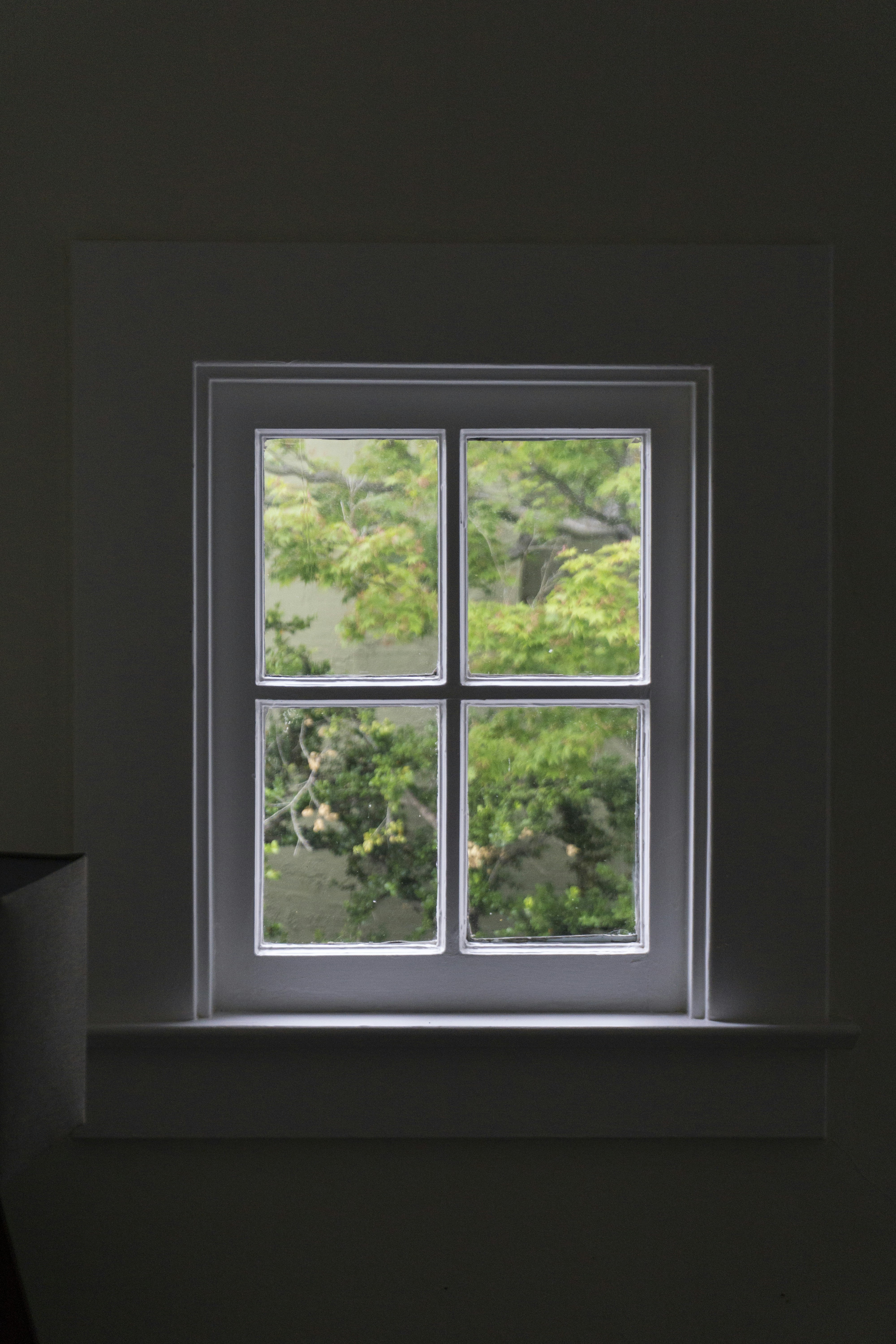
Reference photo: a small window set into its wall, where opening, frame and reveal meet.
A
MARK · TERMS
OPENING VERSUS FRAME
Opening size and frame size
The opening is the gap in the wall the window fills, measured from one inside face of the brickwork, framing or reveal to the other. The frame size is the outside dimension of the window itself. It is always a little smaller than the opening, so the window can be set square, packed and sealed.
When you measure at home, measure the opening. Leave the allowance for fit to the people making the window.
OPENINGWhat you measure. Surface to surface inside the wall, where the window will sit.
FRAMEWhat gets made. Sized from the opening, with room left for packing and sealing.
EXISTING WINDOWUseful context. If the old window is still in place, note its frame size too, clearly labelled as the frame.
B
MARK · SIZE
Width first, then height, three times each
Window sizes are written width by height, in millimetres, so 1200 × 900 means twelve hundred wide and nine hundred high. Walls and old frames are rarely perfectly square, which is why one reading is never enough. Take three of each, write every figure down and keep them in the same order.
READING
WIDTH
W1Top, just below the head
W2Middle, halfway up
W3Bottom, just above the sill
HEIGHT
H1Left, beside one jamb
H2Centre of the opening
H3Right, beside the other jamb
NOTE
Record all six figures. The smallest width and the smallest height mark the tightest point of the opening. A big difference between readings is worth pointing out, because it tells the maker the opening is out of square.
C
MARK · DEPTH
Wall depth, sill and reveal
A window sits inside a wall, not on it, so the wall matters as much as the opening. Measure the wall depth from the inside face to the outside face at the edge of the opening. Look at the reveal, the return of wall between the window and the room, and note whether it is plaster, timber lining or brick. Then check the sill inside and out: what it is made of, whether it is sound, and whether it falls away from the frame.
If the sill or frame feels soft, read Restore or Replace? before you measure for something new.
The same opening in a thin wall and a thick one can call for quite different frames.
NOTE BESIDE EACH FIGURE
WALL DEPTHInside face to outside face
REVEALDepth and lining material
INSIDE SILLMaterial and condition
OUTSIDE SILLMaterial, fall and any damage
ARCHITRAVETrim around the opening, if any
D
MARK · LIST
WHAT TO INCLUDE
Your enquiry checklist
01Rough opening sizes. Your width and height readings, marked as approximate.
02Wall depth. Plus what the wall is built from, if you know.
03Photos. The whole window from inside and outside, ready to share.
04Opening direction. Which way it should open and which side the hinges sit, seen from inside.
05Room and floor level. For example a ground-floor kitchen or a first-floor bedroom.
06Style and frame in mind. See the Window Styles Guide and Frame Materials Guide.
07Glass preference. Compare the options in Glazing Options Explained.

Reference photo: a steel tape and a notepad are all the kit you need.
E
MARK · NEXT
These are rough measurements. They start the conversation; they do not finish it.
Figures taken at home are for describing the window you need and weighing up options. Exact sizing comes later in any made-to-order window, so there is no need to chase the last millimetre. Send what you have through the Window Enquiry form, read How a Custom Window Order Starts, and keep Window Care and Maintenance for once the new window is in.