?
MARK · QUESTIONS
Home / Window Questions
WINDOW SCHEDULE: QUESTIONS, ANSWERED FROM THE GUIDES
Window Questions
Short answers on styles, frames, glass, period looks and measuring. Each one points to the guide that goes deeper.
Ordering a window made to order comes down to a few decisions: what type of window, which frame, what glass and what size. This schedule sets out the questions that come up along the way and answers them plainly. Price, timing and availability depend on the window you describe, so those questions lead to a Window Enquiry rather than a figure on a page.
A
MARK · TYPE
Types and frames
What can be made, and what it should be made from.
QUESTION 01
What types of windows can be made to order?
Any type. The common families are casement windows that hinge at the side, awning windows that hinge at the top, sash windows that slide up and down, sliding windows that run sideways, fixed panes that do not open, and bay windows that project from the wall. A window made to order can follow one of those patterns or combine them, such as a fixed centre pane between two casements. The Window Styles Guide explains each type and where it works best.
QUESTION 02
How do I choose between timber, aluminium and uPVC frames?
Start with the house and the upkeep you are happy to do. Timber suits traditional facades and can be painted any colour, but it needs regular finishing. Aluminium gives slim, strong sections for large panes and wide sliders and needs little beyond cleaning. uPVC is low-upkeep and insulates well, though its profiles are usually bulkier. The Frame Materials Guide compares looks, upkeep and suitability side by side.
QUESTION 03
Can different styles sit on the same house?
Yes. Opening windows go where you need fresh air; fixed panes go where you only want light or a view. A mix looks deliberate when the frame colour, sightlines and head heights stay consistent across the facade.
B
MARK · GLASS
Low-E and acoustic glass
QUESTION 04
What does Low-E glass do?
Low-E glass carries a very thin coating that reflects heat. It helps hold warmth inside in cold weather and cuts some of the sun’s heat coming in during summer, while still letting daylight through. It is often paired with double glazing to lift a window’s overall energy performance.
Glass changes how warm, quiet and bright a room feels more than any other part of the window.
QUESTION 05
What does acoustic glass do?
Acoustic glass is laminated with an interlayer that dampens sound passing through the pane. It is worth considering for bedrooms and living rooms that face busy roads, rail lines or close neighbours. The frame and seals matter too: a quiet pane in a leaky frame still lets noise in.
QUESTION 06
Is double glazing always the right choice?
Often, but not automatically. Double glazing traps an insulating gap between two panes, which helps with temperature and some noise. A period window with slender glazing bars may need a slimmer unit to keep its look. Glazing Options Explained sets out the trade-offs between single, double, acoustic and Low-E glass.
C
MARK · PERIOD
Period looks
QUESTION 07
Can a period look be kept with a new window?
Yes. A period window gets its character from proportion: pane sizes, glazing bar widths, sash depth and the profile of the sill. A window made to order can follow those proportions in timber, with modern glass and hardware inside a traditional outline. Windows for Period Homes covers the details that matter most.
QUESTION 08
Should I restore the old window instead?
Sometimes. If the timber is sound and the trouble is paint, putty, cords or draughts, restoration can keep an original window working. If the frame is rotten through, badly out of square or cannot carry the glass you want, a new window makes more sense. Restore or Replace? lays out five checks.
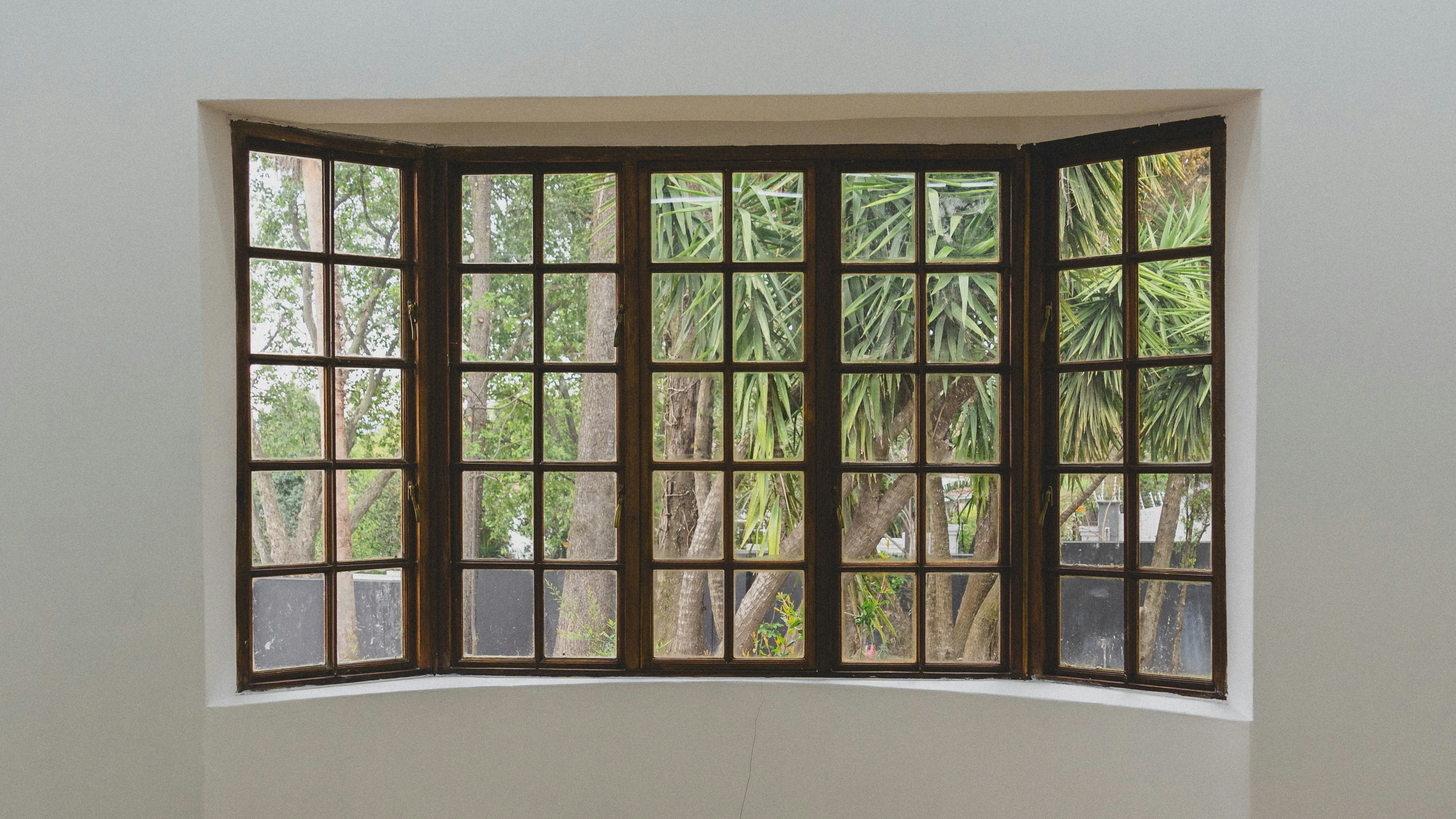
Reference photo: a multi-pane timber bay window, where pane size and bar width set the character.
D
MARK · MEASURE
What to measure
QUESTION 09
What should I measure before I enquire?
01Width of the opening at the top, middle and bottom
02Height at the left, centre and right
03Depth of the wall or reveal around the frame
04How and where the window should open
05Which floor it is on and what sits outside it
Note the smallest width and the smallest height. Openings are rarely perfectly square.
QUESTION 10
Do my measurements need to be exact?
No. Rough numbers taken carefully are enough to start. They show the scale of the window and whether the opening is standard or unusual. Treat them as a starting point, not a final order size. Measuring and Sizing Basics shows where to put the tape and how to note what you find.
E
MARK · ENQUIRE
Price, timing and your enquiry
QUESTION 11
How much does a window made to order cost?
That depends on the window: its size, style, frame material, glass and how many openings are involved. Every window is made to order, so no single figure fits. Describe what you need in a Window Enquiry and the conversation starts from your actual opening.
QUESTION 12
How long will it take, and can you take my order?
Timing and availability depend on the order itself, so they are worked out for each enquiry rather than listed here. Send your window details and ask.
QUESTION 13
What should I describe in my enquiry?
·Which rooms, and how many windows
·The style you have in mind
·A frame material, if you have a preference
·Glass priorities: warmth, quiet or light
·Rough opening sizes from section D, What to measure
·A new opening or a replacement, and any period look to keep
How a Custom Window Order Starts walks through this preparation step by step.
→
MARK · READ ON
The full chapters
Every answer above is a summary. The guides hold the detail, and the reference gallery shows the shapes in context.
Still weighing a question that is not listed? Put it in a Window Enquiry alongside your window details.